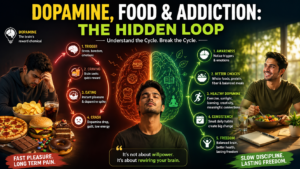
Food cravings can arrive at surprisingly specific moments: when the workday ends, when a delivery notification appears or when you finally sit down after a difficult conversation. Suddenly, only something sweet, salty or crunchy seems appealing.
It is tempting to explain this as, “You are not hungry; your brain is asking for dopamine.” That line catches attention, but it oversimplifies how eating works. You may be hungry, seeking comfort, responding to a familiar cue or experiencing several of these things together.
Understanding the difference can help you respond with curiosity instead of guilt. The aim is not to outsmart your body or suppress every urge to eat. It is to understand what you need.
What dopamine has to do with food cravings
Dopamine is a chemical messenger involved in motivation, learning and reward. In food-related behaviour, it helps explain why a food or the thought of getting it can capture your attention.
Researchers distinguish between “wanting” a reward and “liking” the experience of it. These processes overlap, but they are not identical. A research review on food reward explains why dopamine should not simply be described as the chemical that creates pleasure.
Think about smelling fresh samosas while walking past a shop. The smell may make you want one even if you had not been thinking about food. That does not establish a dopamine deficiency, addiction or lack of discipline. It is an everyday example of how food cues can influence desire.
Nor does dopamine operate separately from physical hunger. The brain integrates information about energy needs, experiences and the environment. “Brain hunger” and “body hunger” are not two completely independent systems.
Hunger and cravings can happen together
Hunger often reflects a need for food; a craving is a strong desire for a particular food. However, neither follows a perfectly predictable timetable. Being hungry can make a favourite snack especially appealing, while stress can make your appetite harder to interpret.
Someone who missed lunch may crave biscuits at 5 p.m. Labelling that urge as “just dopamine” could distract from the more immediate issue: they have not eaten enough. Equally, someone who has eaten adequately may still enjoy dessert or want a comforting taste.
You do not need to prove that you are hungry enough to deserve food. A useful check-in is: when did I last eat, was it enough, and what else is happening right now? These questions provide context, not a pass-or-fail test.
A pause should help you listen, not delay eating
If you notice hunger or realise that a meal is overdue, respond with food. A pause is useful only when it helps you choose what would feel satisfying. It should not become a rule that makes you wait, drink water instead or earn permission to eat.
Why food cravings may feel stronger on difficult days
Stress can make comfort especially appealing
Food can offer temporary comfort, and familiar eating routines can become associated with difficult feelings. MedlinePlus describes this connection and encourages noticing the situations around emotional eating.
Picture arriving home after a crowded train journey and a demanding day. Chai and a familiar snack may feel like the first enjoyable moment you have had. The snack is not a moral problem. It may be worth asking whether you also need quiet, support or a proper meal.
Too little sleep can affect appetite
A controlled study in women without obesity found that shortening sleep increased hunger and food cravings. This sleep-curtailment research helps show why appetite is influenced by more than willpower, although one study cannot predict an individual’s response.
If cravings regularly follow short nights, consider your sleep pattern alongside your meals. Improving sleep is a health-supporting habit, not a guaranteed method for removing cravings.
Your surroundings can make eating feel automatic
A biscuit tin beside the laptop, an evening television routine or a favourite food advertisement can become part of a repeated sequence. You might find yourself reaching before consciously deciding.
Rather than treating every cue as an enemy, choose one routine to make more deliberate. For example, take your tea break away from work and decide what you would enjoy eating with it.
Food cravings and your everyday meals
Before looking for a supplement or a “dopamine reset,” look at whether your schedule allows you to eat regularly. MedlinePlus’s eating-habits guidance recommends examining patterns and planning practical changes, including avoiding skipped meals.
In an Indian household, that might mean keeping breakfast ingredients ready, packing lunch before a long commute or having a convenient afternoon snack available. Examples include curd with fruit, an egg sandwich or roasted chana alongside something else you enjoy.
These are options, not a list of approved foods. Your preferred snack can also fit. The useful question is whether your food is satisfying and your overall eating pattern supports your needs, rather than whether every choice looks perfect.
A meal such as dal, rice or roti, vegetables and curd can be a familiar starting point. Adjust portions and ingredients to your appetite, preferences and any individual medical advice.
A kinder way to respond in the moment
Try a brief conversation with yourself when you notice an urge:
- Name the experience: “I want something sweet,” rather than “I have no control.”
- Check the context: consider your last meal, energy, mood and what triggered your attention.
- Choose a response: eat a meal or snack if needed; if you want comfort too, make space for that as well.
- Notice satisfaction: when possible, give the food some attention and allow yourself to enjoy it.
Comfort could include calling someone, stepping away from a stressful task or listening to music. These are additional ways to care for yourself, not substitutes for needed food or tricks that must make a craving disappear.
When to seek support with eating
Occasional cravings do not mean you have an eating disorder. However, repeated episodes of feeling unable to stop eating, eating unusually large amounts with distress, or hiding eating because of shame deserve professional attention. NIDDK explains the signs of binge eating disorder; diagnosis requires a qualified professional.
Also seek help for severe restriction, compensatory behaviours or persistent anxiety around food. A clinician, dietitian or mental-health professional with eating-disorder experience can assess your situation.
Health coaching can support everyday habits within appropriate boundaries. Our guide to responsible health coaching explains why recognising when to refer is part of good practice.
Listen to the whole story behind your appetite
You are not a dopamine problem to solve. Food cravings can reflect a mixture of biology, memories, circumstances and ordinary enjoyment.
Instead of assuming, “I am not hungry,” ask, “What would help me feel cared for right now?” Sometimes the answer is food. Sometimes it is food and a break. For more learning about nutrition and health coaching, explore ISHF. Understanding yourself is a better starting point than judging yourself.