If you are losing muscle, everyday life can quietly start feeling harder. The grocery bags seem heavier. Getting up from the sofa takes more effort. You hesitate before taking the stairs, then tell yourself, “I suppose this is just ageing.”
Sometimes that explanation misses something important. Ageing is a real, complex biological process, and muscle loss is only one part of it. Yet declining strength deserves attention because it can affect the activities that make life feel independent and enjoyable.
The useful message is not that your body has stopped ageing. It is that you do not have to dismiss every change as inevitable. Understanding your muscle health can help you choose a better next step.
Why you may be losing muscle as you age
Muscle tissue changes over time. Age-related muscle loss and weakness can develop into sarcopenia, a condition that affects physical function. It is more than a cosmetic concern: the amount you can lift, how steadily you walk and how confidently you move matter too.
The National Institutes of Health explains that inactivity, some chronic illnesses and poor nutrition can worsen age-related muscle loss. Hormonal changes around menopause can also contribute. A person who notices declining strength therefore needs more than the advice to “accept your age.”
At the same time, feeling tired or weak does not prove that you have sarcopenia. A clinician can assess your symptoms and decide whether tests of strength, walking ability or body composition are appropriate.
Your daily routine can change before you notice
Think about an ordinary week. Perhaps a walking commute has become a car journey, groceries arrive at the door and most work happens at a desk. None of those conveniences is a personal failure. They simply make it easier for movement to disappear without a deliberate decision.
Try writing down when you move and when you sit. The point is not to judge yourself. It is to identify a realistic place for activity in the life you actually have.
Why strength matters beyond your appearance
Muscle supports everyday movement. Protecting it can mean carrying your own suitcase, getting out of a low chair or joining a family outing with greater confidence. Those goals may matter more to you than changing how your arms look.
Research summarised in the National Strength and Conditioning Association position statement on older adults supports appropriately designed resistance training for improving strength and physical function. Programmes should reflect a person’s abilities, health conditions and experience.
This also changes what progress looks like. A useful question is, “Are familiar tasks becoming more manageable?” You do not need to compare yourself with a fitness influencer or with what you could lift twenty years ago.
Walking helps, but add a strength-building habit
Keep the walks you enjoy. Walking contributes to aerobic fitness, while resistance exercises give muscles a different challenge. A balanced routine makes room for both.
The World Health Organization recommends muscle-strengthening activities involving major muscle groups on at least two days each week for adults, alongside aerobic activity. If you are currently inactive, build towards appropriate activity levels gradually rather than treating the guideline as a first-day workout.
Choose exercises that fit your starting point
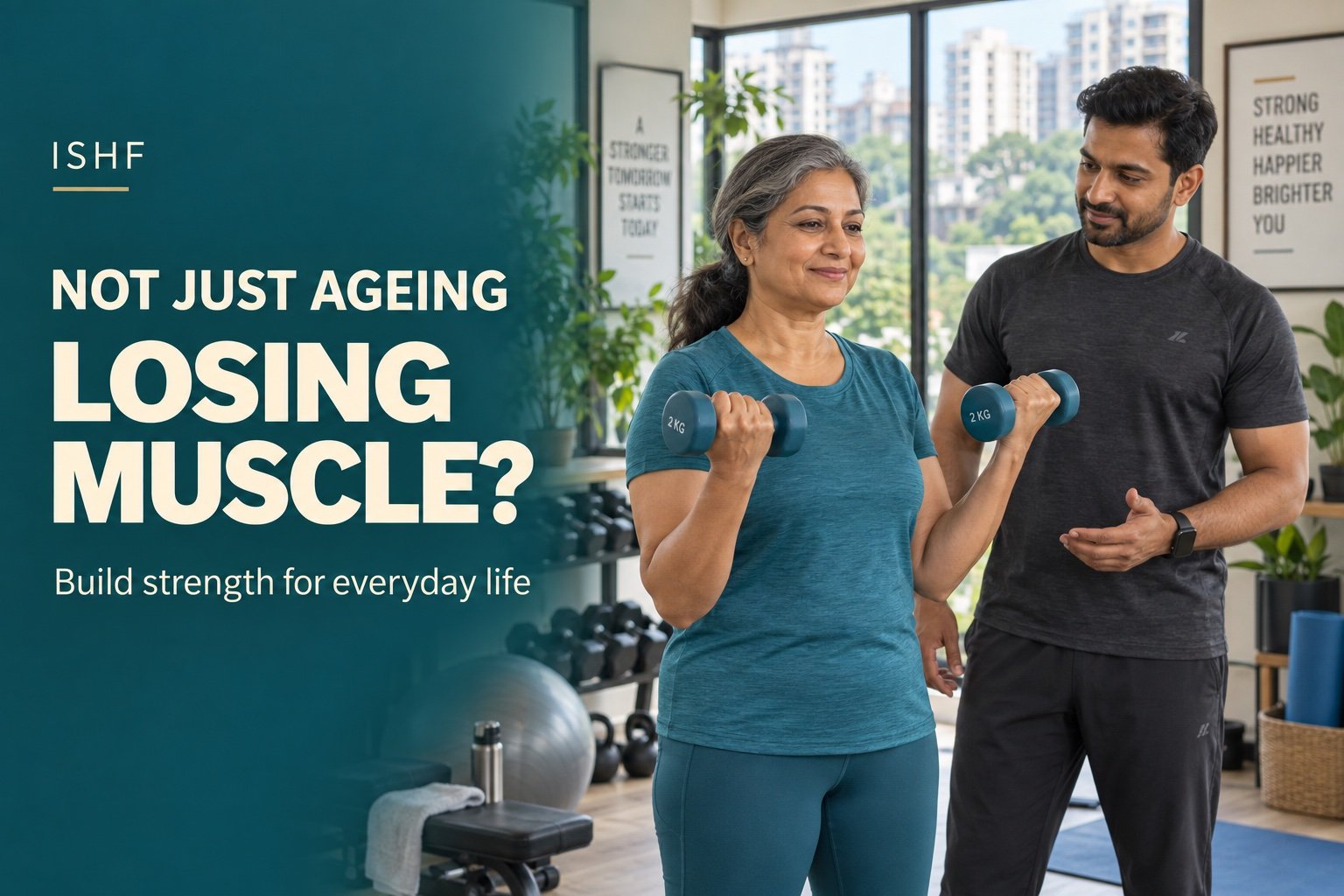
Possible beginner movements include standing up from a sturdy chair, wall push-ups and exercises using light weights or resistance bands. The best options depend on your balance, joint comfort and current capacity. A qualified exercise professional can help you learn controlled technique and adapt movements.
Start with a manageable amount, breathe normally and allow recovery between sessions. As an exercise becomes easier, a professional can guide gradual increases in repetitions or resistance. Sharp pain, dizziness or unusual breathlessness are reasons to stop and seek advice, not signals to push harder. NIDDK’s activity guidance includes advice on choosing suitable activities and discussing health concerns before starting.
Losing muscle? Start with familiar Indian foods
Exercise is one part of the picture. Your food needs to support your body, too. NIDDK’s nutrition guidance for older adults encourages nutrient-rich meals that include protein foods. Eating less as you get older should not mean overlooking nutritional quality.
You can plan around familiar options such as dal, rajma, chana, soy, tofu, milk, curd, paneer, eggs, fish or chicken, according to your preferences. For example, breakfast might include curd with oats or eggs with toast; lunch could include a substantial serving of dal or beans; dinner might feature tofu, paneer, fish or chicken with vegetables and grains.
These are meal ideas, not nutritionally identical swaps or a personalised diet chart. Portions and total intake matter. If your appetite is low, you are unintentionally losing weight or you have kidney disease or other dietary restrictions, ask a qualified dietitian or clinician to tailor your plan.
A practical first week without an extreme overhaul
If you are worried about losing muscle, avoid starting with a complicated challenge. Choose a few repeatable actions:
- Pick one meaningful goal: write down an everyday task you want to feel more confident doing.
- Book two manageable activity slots: use them for suitable strength exercises or an introductory session with a qualified professional.
- Plan tomorrow’s meals: identify the protein-containing foods and make sure they are available at home.
- Keep a short record: note what you tried, how it felt and any symptoms you want to discuss.
At the end of the week, ask what fitted naturally and what needs adjusting. If evenings were consistently too busy, try another time. A plan that works in an ordinary week is more useful than an impressive plan you cannot repeat.
When losing muscle needs professional attention
Arrange a medical assessment if weakness is worsening, you have unexplained weight loss, repeated falls or increasing difficulty with ordinary activities. Do not assume that every symptom is caused by age or a lack of exercise. Sudden weakness, particularly on one side, needs urgent medical attention.
A health coach can help with routines and accountability, but diagnosing illness and treating sarcopenia require appropriately qualified healthcare professionals. Our guide to becoming a successful health coach explains why responsible coaching includes knowing those boundaries.
Give your future self a stronger foundation
If you are losing muscle, you cannot promise yourself a body that never ages. You can make room for actions that support strength, and ask for help when something changes.
Start with the version of yourself who is here today: your current schedule, your current abilities and one activity you want to keep enjoying. For more learning about nutrition and health coaching, explore ISHF. Your next step does not need to be dramatic. It needs to be achievable enough to take again.