
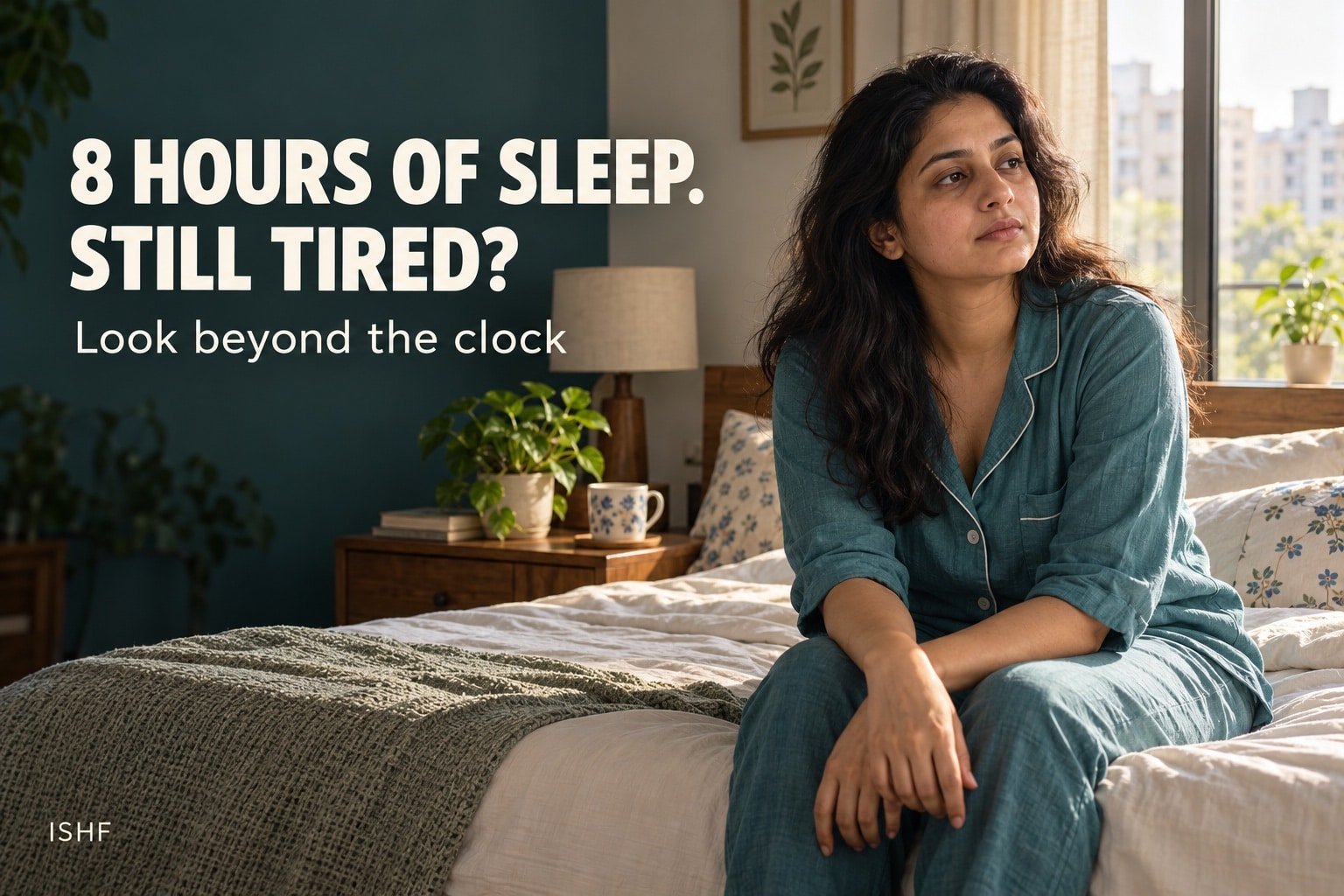
If you feel tired after 8 hours of sleep, mornings can be frustrating. You gave yourself a full night, yet getting ready for work feels harder than it should. Before blaming yourself for being lazy, remember that time in bed is only one part of the picture.
Sleep quality, timing, daily demands and health conditions can all matter. Eight hours is not a guarantee of feeling refreshed, and persistent exhaustion deserves attention. Here are seven possibilities to consider, followed by a practical way to understand your own pattern.
Why am I tired after 8 hours of sleep?
There is no single explanation that fits everyone. The CDC’s guidance on sleep recommends at least seven hours for adults aged 18–60 and emphasises both duration and quality. Your individual needs may differ. A useful starting point is to notice whether you feel sleepy enough to doze off, physically drained, or both.
1. Eight hours in bed may include less actual sleep
Imagine going to bed at 10:30 pm and getting up at 6:30 am. That is eight hours on the clock. But if you spend 40 minutes scrolling, take time to fall asleep and wake during the night, you have slept less than eight hours.
For a few days, record when you try to sleep, your estimated time to fall asleep and any awakenings you remember. Estimates are enough; you do not need to monitor the clock throughout the night. This is an observation exercise, not another test to pass.
2. Your sleep may be repeatedly interrupted
A bright room, traffic noise, uncomfortable temperature or repeated phone alerts can make rest less settled. Looking after a child or an unwell family member may also break up your night. These are real demands, not failures of discipline.
Choose the most practical adjustment first: silence unnecessary alerts, reduce light or discuss sharing an overnight responsibility. If your sleeping environment is already comfortable but you still wake frequently, mention this to a healthcare professional. More time in bed does not identify the cause of those awakenings.
3. Your sleep timing keeps changing
Your body uses internal clocks to help organise sleep and wakefulness. NHLBI’s explanation of the sleep–wake cycle describes how light, darkness and other signals influence those clocks. A constantly shifting routine can make it harder to feel sleepy and alert at convenient times.
If your schedule allows, keep wake-up times reasonably consistent and get outdoor daylight during your waking day. For someone working night shifts, a standard early-morning routine may be unrealistic. Work with your actual responsibilities instead of copying a timetable that does not fit your life.
4. Evening chai or coffee may be affecting sleep
A cup of chai can feel comforting after a busy day, but tea and coffee contain caffeine. Its alerting effect can interfere with sleep, even when you consider your evening drink a familiar habit. Alcohol is also not a reliable sleep aid.
Try moving caffeinated drinks earlier and notice whether your nights change. Include energy drinks and pre-workout products when reviewing your intake. You do not need to label a favourite drink “bad”; its timing and your response are the useful questions.
5. Stress is following you into bedtime
You may switch off the lights while still mentally answering messages, planning tomorrow or worrying about family. Stress can contribute to sleep difficulty and fatigue. A long day can leave you exhausted without making it easy to settle down.
Make a small transition between responsibilities and bed: write down tomorrow’s essentials, read something calming or spend a few quiet minutes breathing comfortably. If worry or low mood persists, professional support may help. A bedtime routine should support you, not become another source of pressure.
6. A sleep disorder could be disrupting your night
Loud snoring with witnessed breathing pauses, gasping or choking needs medical attention, particularly alongside daytime sleepiness. These can be signs of sleep apnoea, in which breathing repeatedly stops and starts during sleep. Snoring alone does not establish a diagnosis.
The NHS guidance on sleep apnoea explains that assessment may include overnight monitoring of breathing and other signals. Better habits alone may not be enough when a sleep disorder is present. If you are struggling to stay awake, do not drive or operate machinery.
7. Fatigue may have a cause beyond sleep
Stress, some medicines, recent illness and conditions such as anaemia, diabetes or thyroid problems can contribute to tiredness. Symptoms overlap, so feeling tired after 8 hours of sleep does not tell you which explanation applies.
As the NHS information on tiredness and fatigue advises, unexplained fatigue lasting a few weeks or affecting daily life should be assessed. A clinician can decide whether tests are appropriate. Avoid starting iron, thyroid medication or a stack of supplements based only on tiredness, and do not stop prescribed medicines without advice.
A simple seven-day review when you feel tired after 8 hours of sleep
Use one page in a notebook. The aim is to arrive at useful observations, not to diagnose yourself or guarantee a cure in a week. Notes cannot explain every case of feeling tired after 8 hours of sleep, but they can make your next conversation more specific.
- Record your pattern: bedtime, wake-up time, remembered awakenings, naps and daytime energy.
- Note the context: late drinks, demanding workdays, caregiving or anything unusual.
- Choose one manageable change: for example, moving evening chai earlier or silencing notifications.
- Keep everyday meals practical: plan familiar options such as dal, roti or rice, vegetables and an appropriate protein source. No special “sleep food” is required.
- Review without judgement: what became easier, what stayed difficult, and what would you like to discuss with a clinician?
If food planning is another source of confusion, our guide to healthy foods that may not suit everyone explains why individual needs matter. Health coaching can support routines and follow-through, while medical diagnosis and treatment belong with qualified healthcare professionals.
When should you seek help?
Do not wait for your notebook experiment to finish if you have witnessed breathing pauses, marked daytime sleepiness or worsening symptoms. Arrange an assessment when tiredness persists, limits normal activities or comes with other changes, such as unexplained weight loss.
If you remain tired after 8 hours of sleep, the next step is understanding the pattern rather than forcing yourself through it. You deserve to take that signal seriously. Explore more practical health education at ISHF, and bring persistent concerns to a healthcare professional.
This article provides general health education and does not replace an individual medical assessment.