
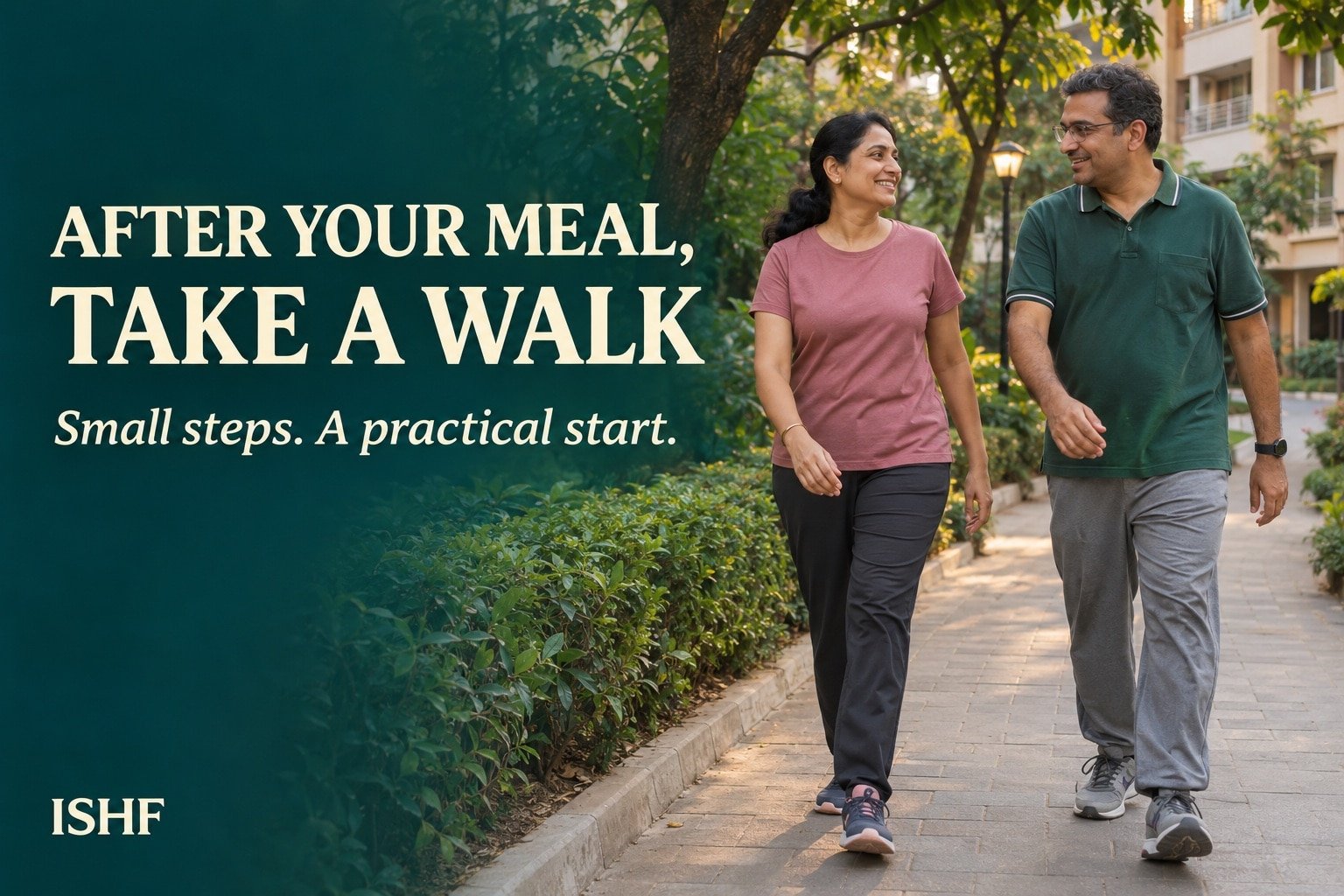
Walking after meals can be a practical place to start when looking after your health feels like another full-time job. You finish dinner, put the plates away and finally sit down. Finding an hour for exercise seems impossible, but a short stroll may fit into the evening you already have.
This is not a promise to erase a meal, melt belly fat or replace diabetes treatment. It is an invitation to make a little room for movement. Here is what the evidence suggests, what it cannot promise and how to build a routine that respects your body and your responsibilities.
What does research say about walking after meals?
In a randomised crossover study published in Diabetologia, 41 adults with type 2 diabetes were advised to walk either for 30 minutes daily or for 10 minutes after each main meal. Each intervention lasted two weeks. The after-meal approach produced lower post-meal glucose exposure, with the largest difference after dinner.
That is useful evidence, but it has limits. It was a small, short study in a specific group. It does not establish that every person needs the same walking schedule, that a particular glucose response is guaranteed or that a stroll can prevent all complications. Treat it as support for a manageable activity habit, not a cure.
The CDC’s physical activity guidance for people with diabetes also uses a ten-minute walk after dinner as an example of a clear starting goal. If you have diabetes, your care team can help you fit movement safely around your treatment.
5 simple ways to make walking after meals work
1. Choose the meal with the least friction
Start by looking at your actual day. Walking after meals should fit the schedule you have, not an imaginary quieter one. Breakfast may be rushed, lunch may happen between meetings and dinner may be the first moment you control. Choose the slot that is most realistic rather than trying to copy someone else’s routine.
For a parent, a short walk while another adult handles the dishes may work. For an office employee, it might be a loop around a safe courtyard after lunch. If neither option exists, a clear indoor route can be considered. The first question is where you can move comfortably and safely.
2. Keep the first attempt comfortable
You do not have to turn an after-dinner stroll into a fitness challenge. Begin at an easy pace and with a duration you can manage, even if that is shorter than ten minutes. Avoid forcing a brisk walk when you feel overfull, unwell or uncomfortable.
There is no need to race the clock after your last bite. If walking immediately feels unpleasant, allow time to settle and adjust the plan. Persistent pain, dizziness or unusual breathlessness is a reason to stop and get advice, not a sign that you should push harder.
3. Make the route easier than the excuse
Picture a normal Tuesday evening in an Indian apartment building: the lift is busy, a child needs help with homework and your shoes are somewhere near the washing machine. A plan that starts with a complicated search is already difficult.
Keep suitable footwear somewhere convenient, choose a short familiar route and decide how you will return on time. Use a well-lit area with a steady surface. When heat, poor air quality, rain or unsafe traffic make going outside unsuitable, change the location or timing. Completing an outdoor target is never more important than safety.
4. Give the walk a purpose you enjoy
A few quiet minutes without notifications may appeal more than another performance target. You might enjoy talking with a family member, noticing the trees in your society or simply taking a break from your desk. Choose company and surroundings that make the experience pleasant.
A walking partner should be support, not a condition. Agree that either person can do a shorter route when busy. Avoid comparing steps, speed or body size. The routine belongs to you, even when somebody else walks faster or posts a much bigger number online.
5. Keep the rest of your movement plan
A gentle stroll and a brisk workout are not identical. The CDC’s adult activity recommendations include at least 150 minutes of moderate-intensity activity weekly, or an equivalent vigorous combination, plus muscle-strengthening activity on two days. Activity can be divided into shorter periods.
Walking after meals can contribute to a more active day, but an easy stroll may not reach moderate intensity. Keep building a broader routine suited to your abilities. Our guide to muscle loss and strength explains why maintaining strength also deserves attention.
A realistic first-week experiment
Here is an example to adapt, not a prescription. Someone who usually sits down immediately after dinner might choose three evenings for a brief, comfortable walk. Their aim for the week is to discover whether the slot works, not to produce a dramatic health result.
- Before the week: choose the evenings, route and an indoor alternative.
- On each chosen evening: finish eating, check how you feel and walk for a manageable duration.
- Afterwards: note whether the timing, footwear or family arrangements need changing.
- At the weekend: keep the parts that worked and simplify the parts that did not.
If a late meeting interrupts one evening, you have learned something about the schedule. You have not ruined the week. You may decide that lunch is a better anchor on workdays and dinner works better on weekends. That is a useful adjustment, not a failure of motivation.
When should you get individual advice?
If you take insulin or medicines that can cause low blood sugar, ask your diabetes team how exercise affects your monitoring, food and treatment plan. Do not change medication doses yourself. Foot wounds, significant balance problems, recent surgery or a heart condition may also require a different approach.
Stop activity if concerning symptoms develop. Chest pain, fainting or severe breathlessness needs urgent medical attention. If walking is not accessible to you, a clinician or physiotherapist can help identify suitable movement; there is no requirement to force a walking routine.
Let the habit support your life
You do not need to earn dinner or compensate for enjoying food. Keep meals balanced, take prescribed treatment as advised and allow movement to be one supportive part of the day. Walking after meals is most useful as a repeatable option that fits your circumstances.
For more practical health education, explore ISHF. Start with a comfortable route and a realistic opportunity. A routine worth keeping should leave room for ordinary life, not make you feel that ordinary life is getting in the way.
This article is general health education and does not replace personalised medical or exercise advice.